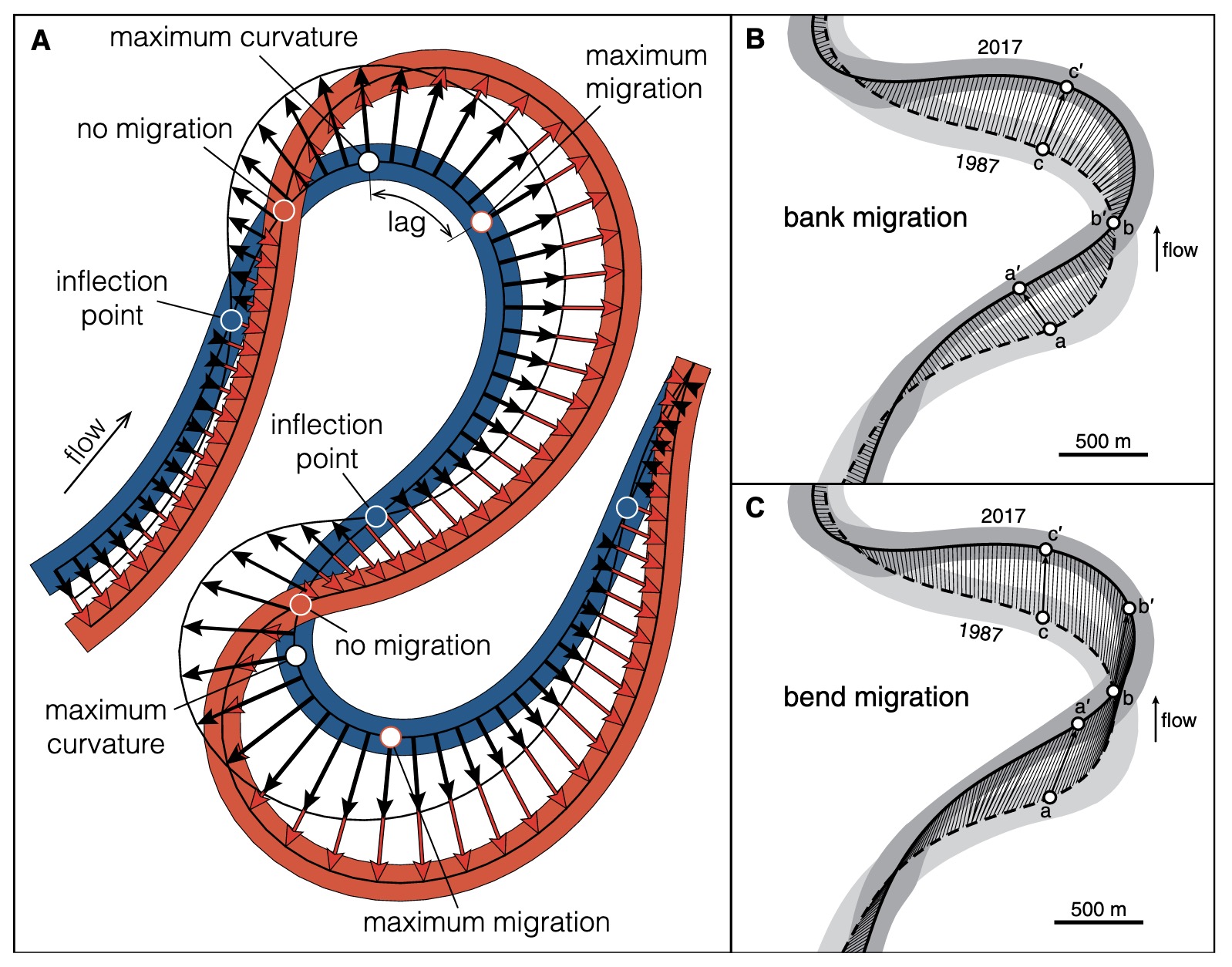
High curvatures drive river meandering
One of the long- and widely held ideas about the dynamics of meandering rivers is that migration slows down in bends with higher curvatures. High-resolution measurements of migration rates of more tha…
One of the long- and widely held ideas about the dynamics of meandering rivers is that migration slows down in bends with higher curvatures. High-resolution measurements of migration rates of more tha…
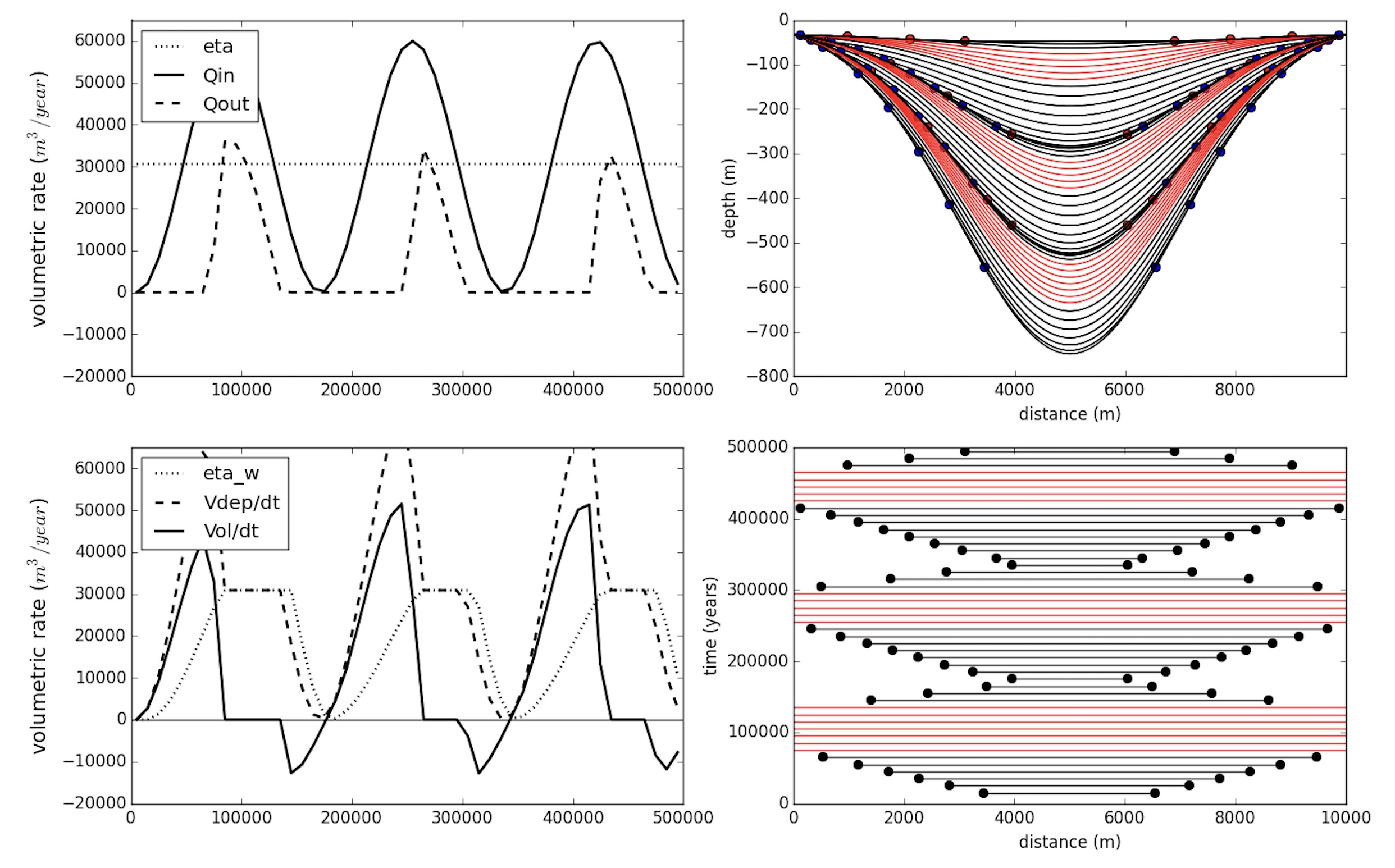
These are animations that accompany our 2015 article on the stratigraphy of salt-withdrawal basins on the slope (Sylvester, Z., Cantelli, A., and Pirmez, C., 2015, Stratigraphic evolution of intraslope minibasins: Insights from surface-based model: AAPG Bulletin, v. 99, no. 6, p. 1099–1129). We have used a simple model that investigates the interplay between subsidence and sedimentation and helps in the understanding of how stratal termination patterns relate to variations in sediment input and basin subsidence. Conventional sequence stratigraphy focuses on what is happening on the shelf and the shelf edge; and the origin of stratal patterns that characterize the typical ‘slug diagram’ are not trivial to relate to the three main parameters that influence continental-margin stratigraphy: changes in sea level, sediment supply, and subsidence. Our minibasin model is simpler because (1) it only has two parameters: sediment supply and subsidence (the impact of sea level - if any - is included in the sediment supply curve); and (2) sedimentary layers are deposited horizontally during each time step. The basic idea is to investigate the geometries of a system that consists of a depression that deepens through time and sediment is deposited in it with a certain rate. ...
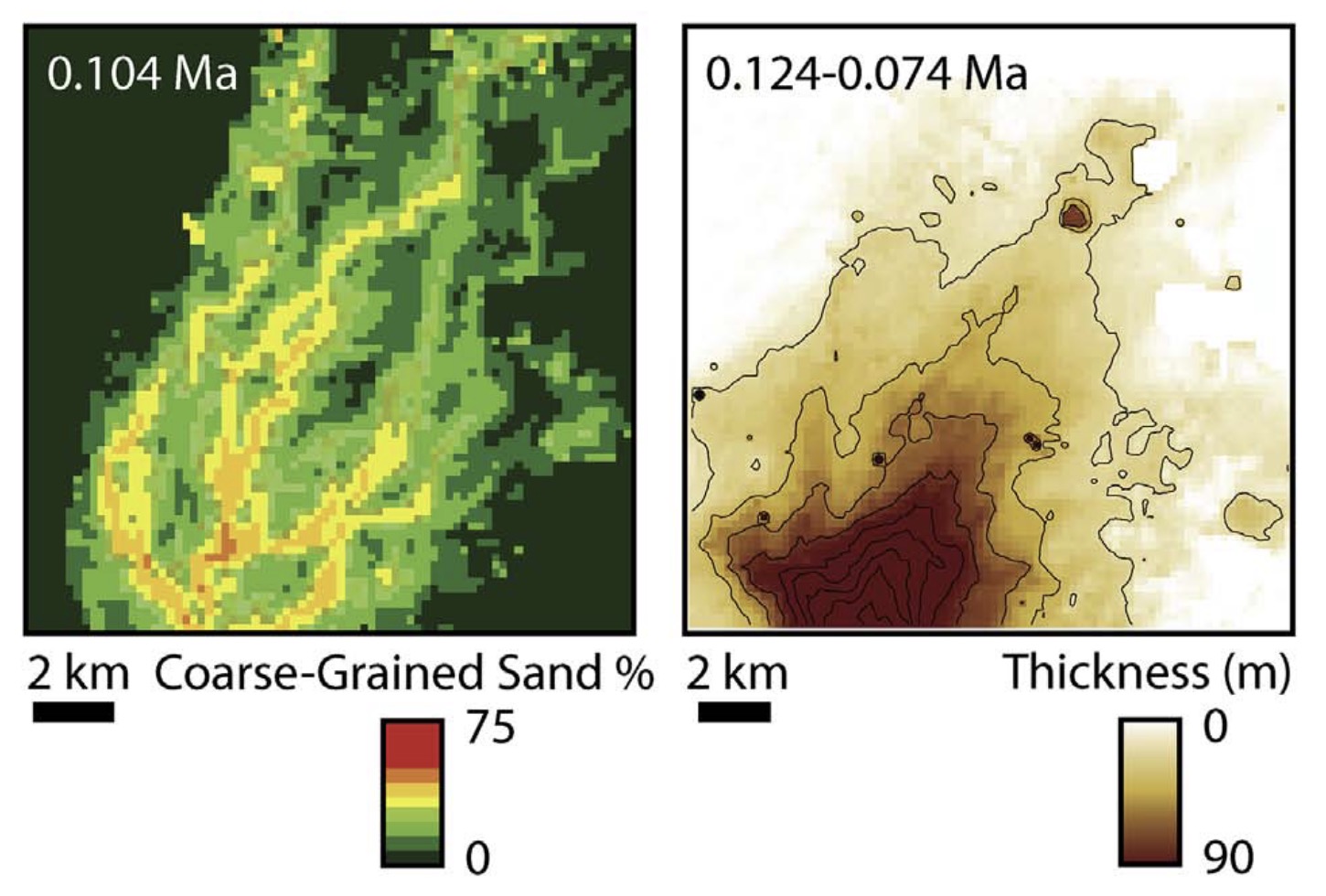
Submarine fans in tectonically active continental-slope basins are targets of petroleum exploration and pro- duction. These slope fans commonly comprise compensationally stacked sandy and muddy archit…
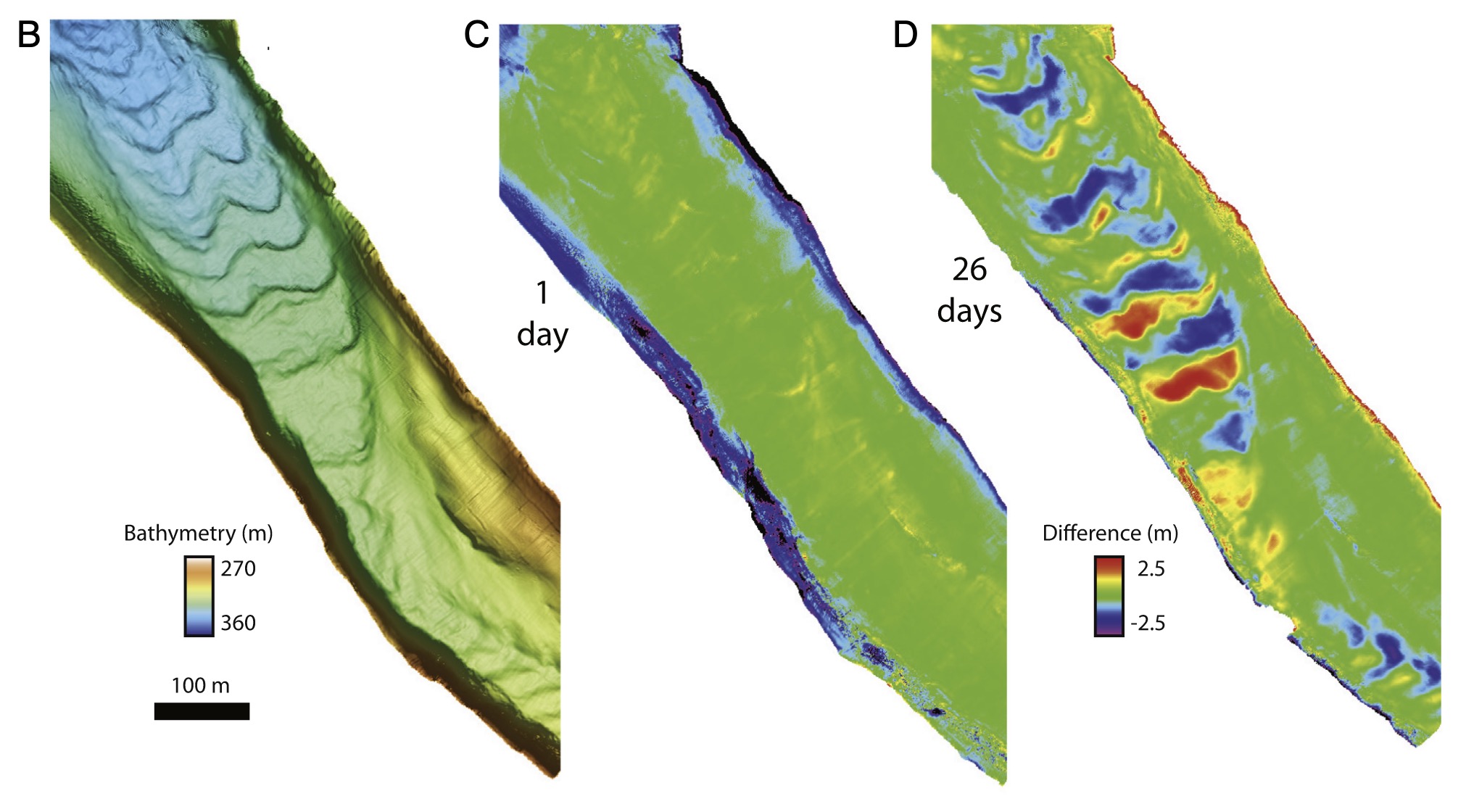
Cyclic steps are long-wave (the ratio of wavelength to height is ≫ 1), upstream-migrating, upper-flow-regime bedforms bounded by internal hydraulic jumps (i.e., transition from densimetric Froude supe…
Deciphering the role slope topography plays in partitioning sediment on siliciclastic continental slope and base‐of‐slope systems helps our understanding of slope depositional processes in significant…
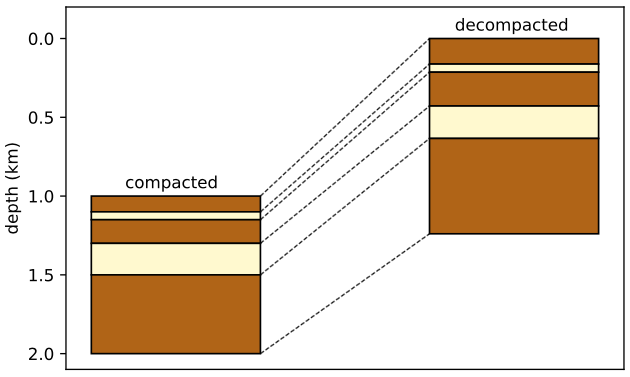
All clastic sediments are subject to compaction (and reduction of porosity) as the result of increasingly tighter packing of grains under a thickening overburden. Decompaction - the estimation of the decompacted thickness of a rock column - is an important part of subsidence (or geohistory) analysis. The following exercise is loosely based on the excellent basin analysis textbook by Allen & Allen (2013), especially their Appendix 56. This notebook is available on Github. ...