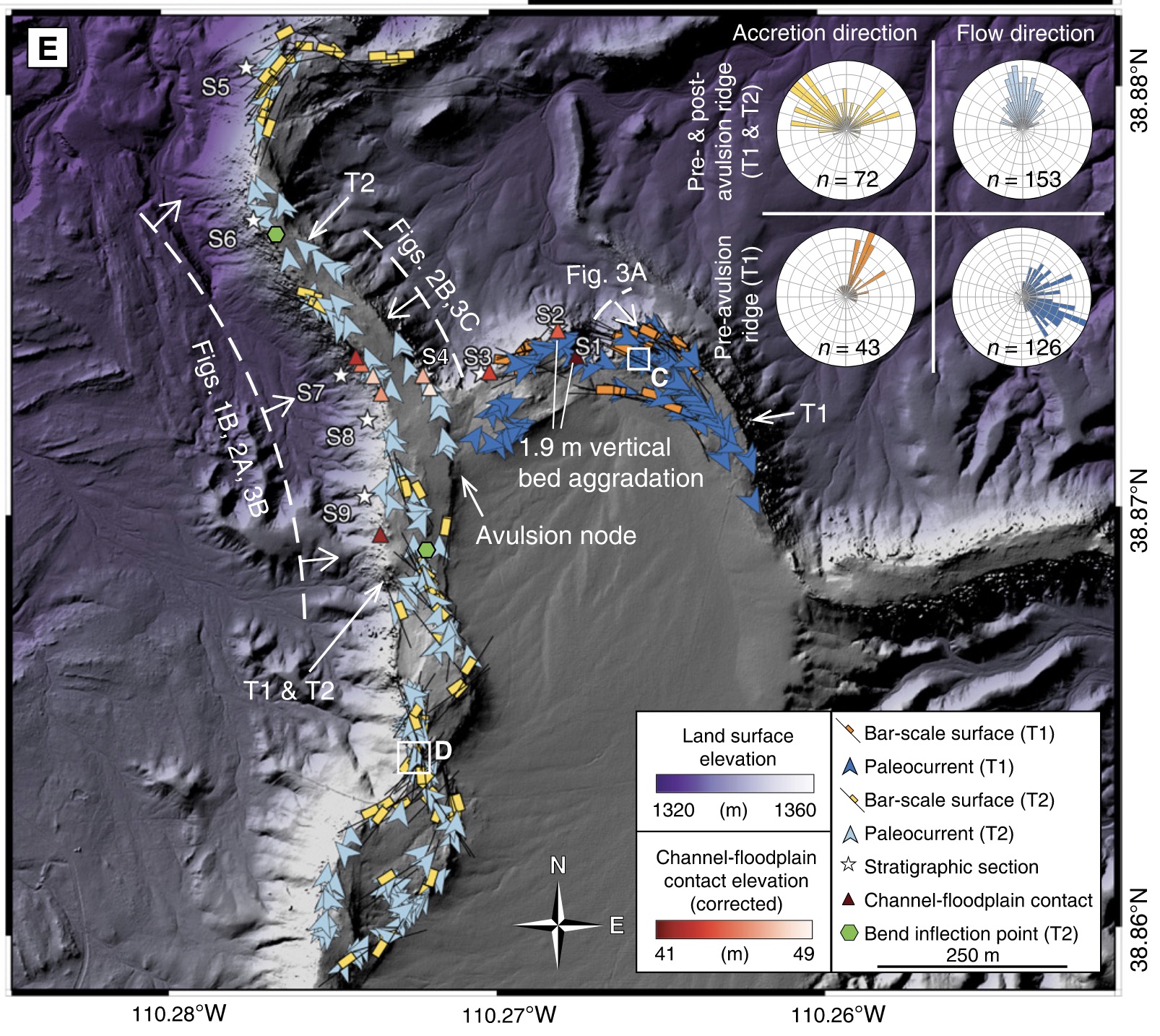
Three-dimensional anatomy of a Cretaceous river avulsion
Three-dimensional analysis of a Cretaceous river avulsion node reveals the anatomy of channel evolution and provides insights into ancient fluvial processes on Earth and Mars
Three-dimensional analysis of a Cretaceous river avulsion node reveals the anatomy of channel evolution and provides insights into ancient fluvial processes on Earth and Mars
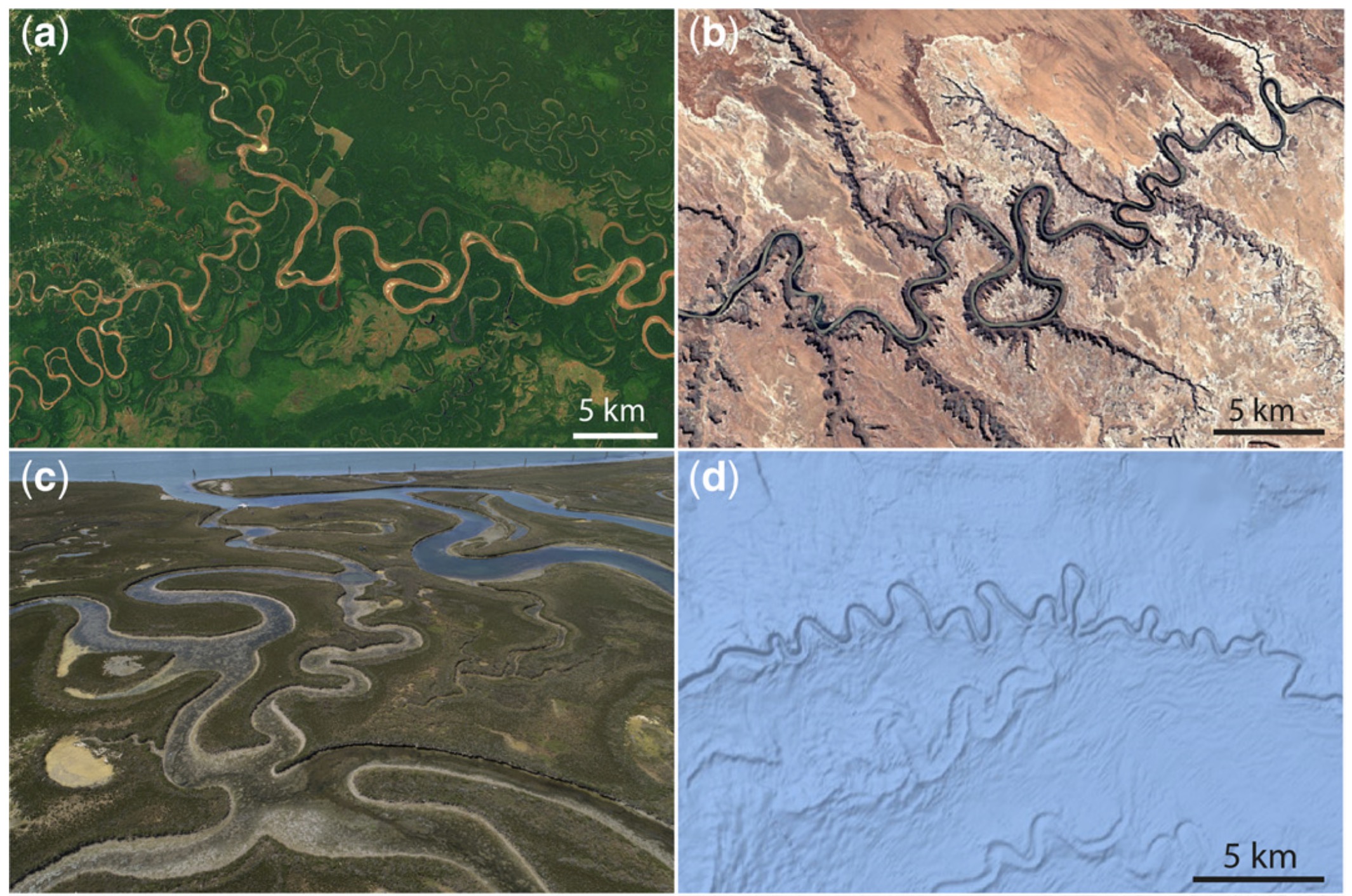
This introductory chapter reviews the history of research on meandering streams and presents a compilation of data on meander morphology.
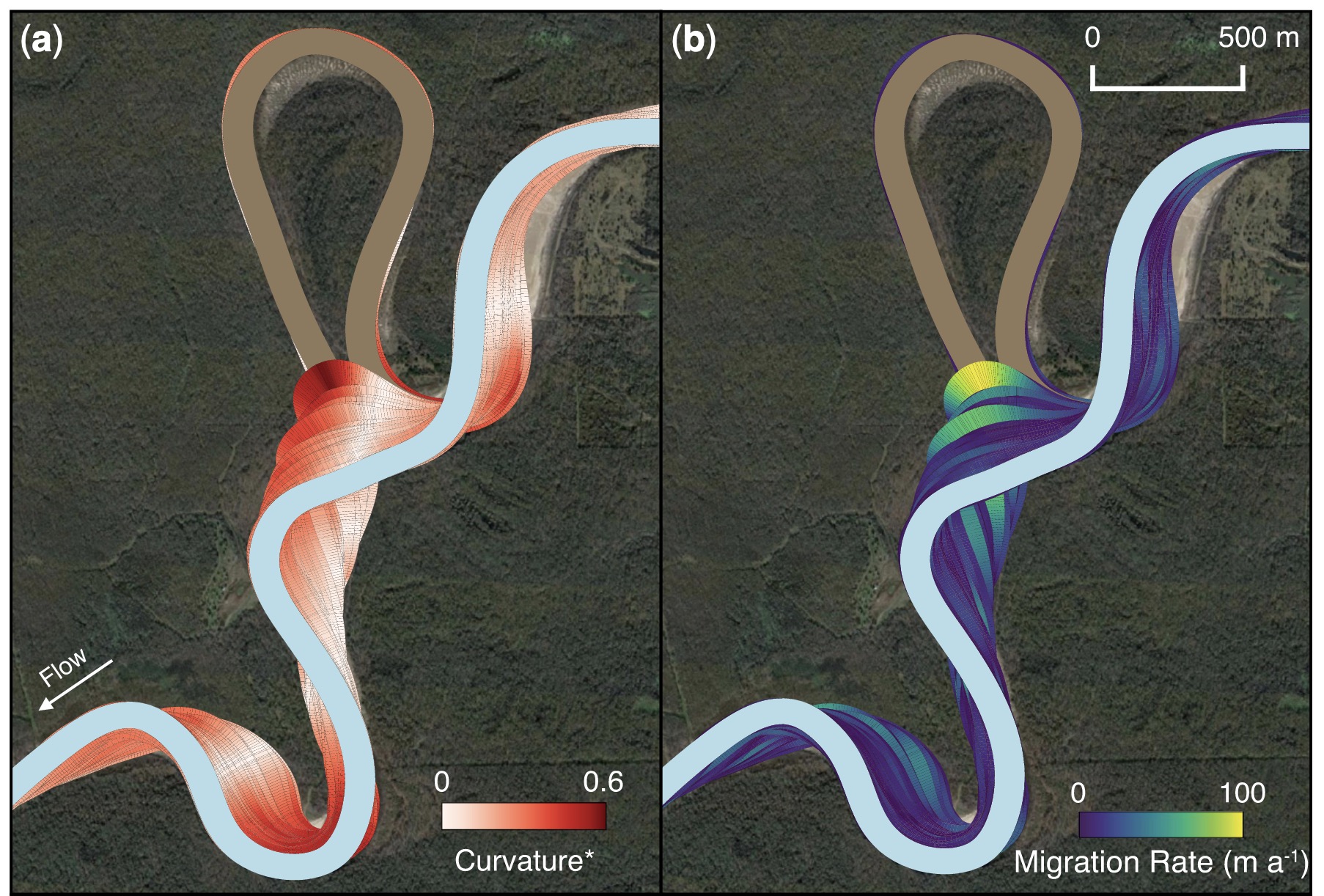
This paper investigates the relationship between post-cutoff bend curvature and channel kinematics in meandering rivers using Trinity River data.
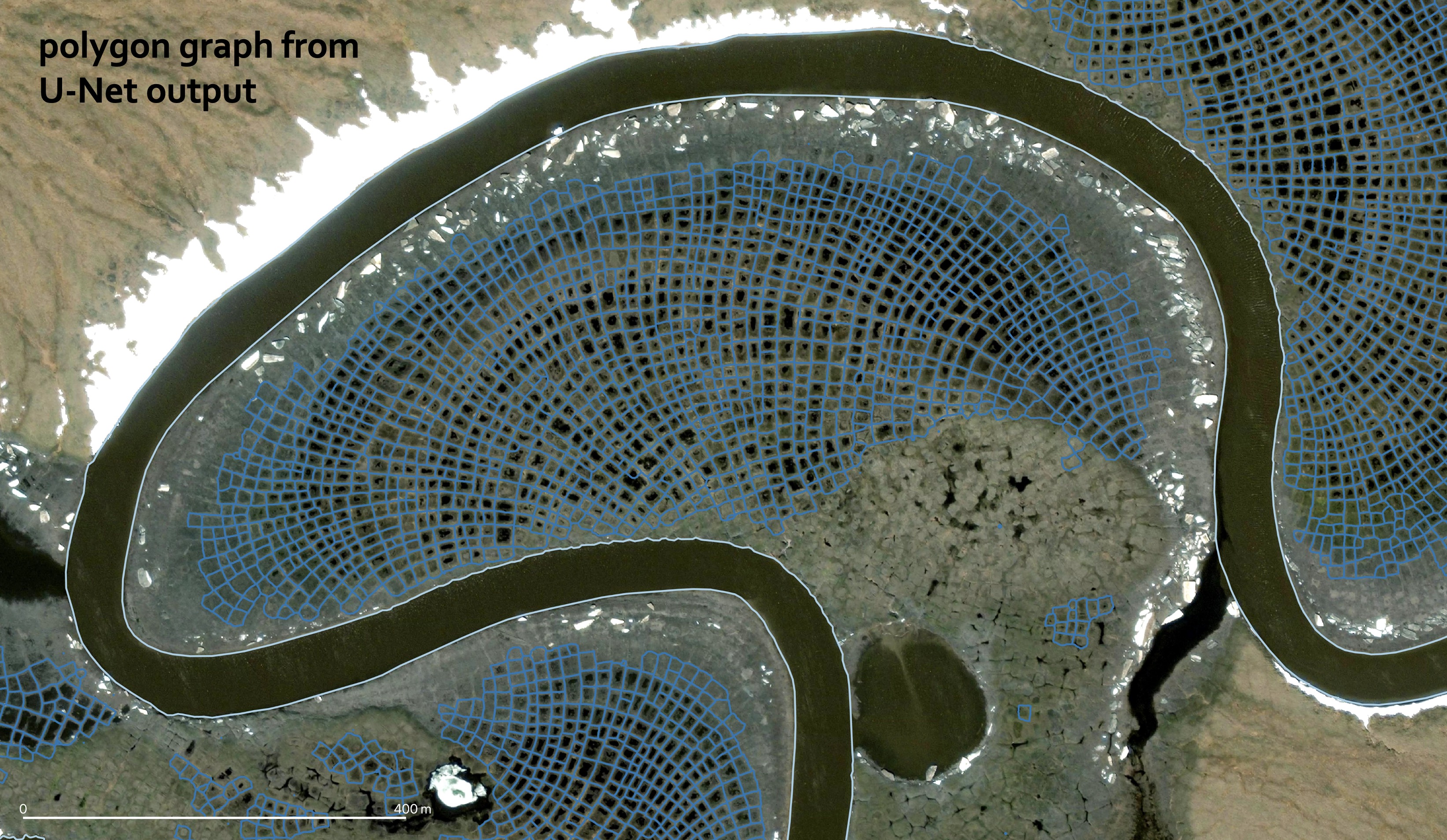
A number of meandering rivers in the Arctic, especially in Siberia, have point bars with strikingly structured permafrost polygon patterns. We use a Unet-type convolutional neural network to map the polygons.
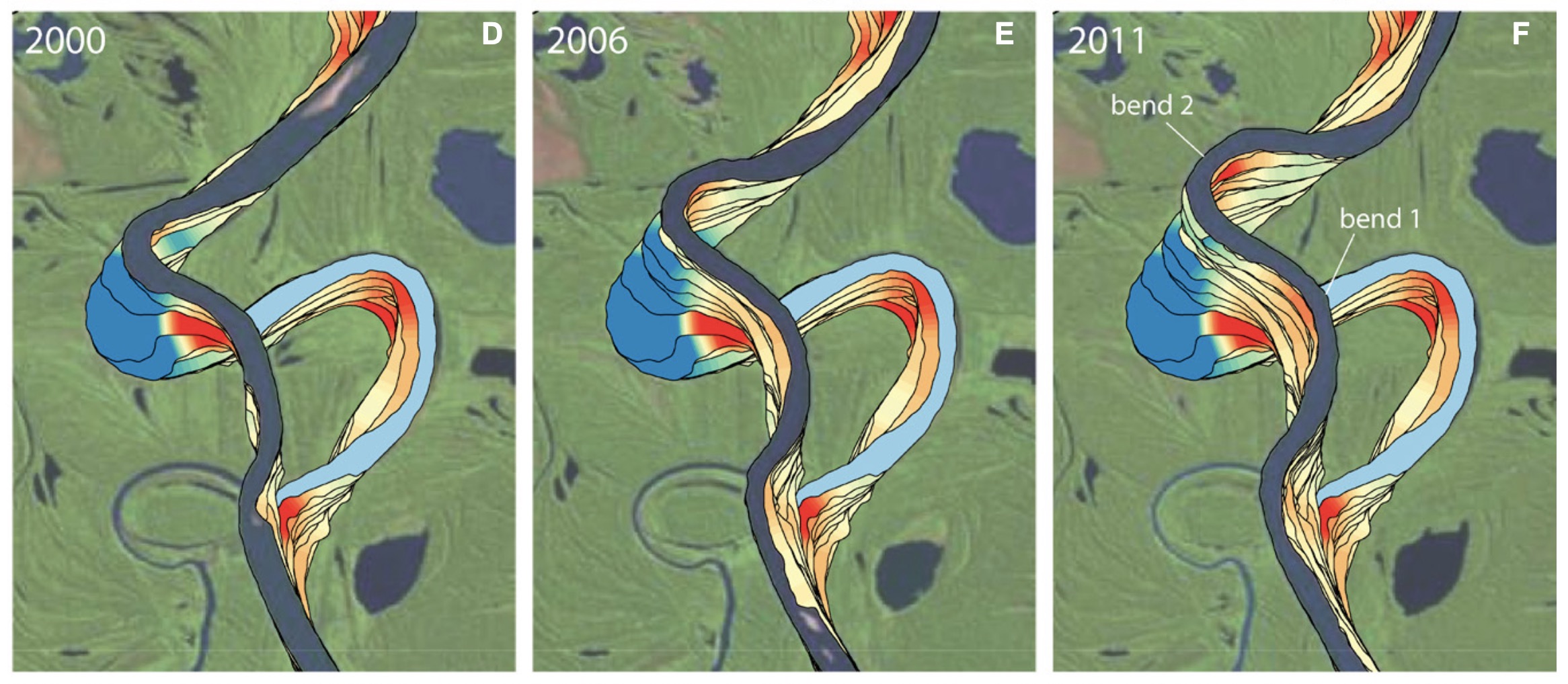
This paper explores the development of counter point bars in meandering rivers through autogenic translation processes.
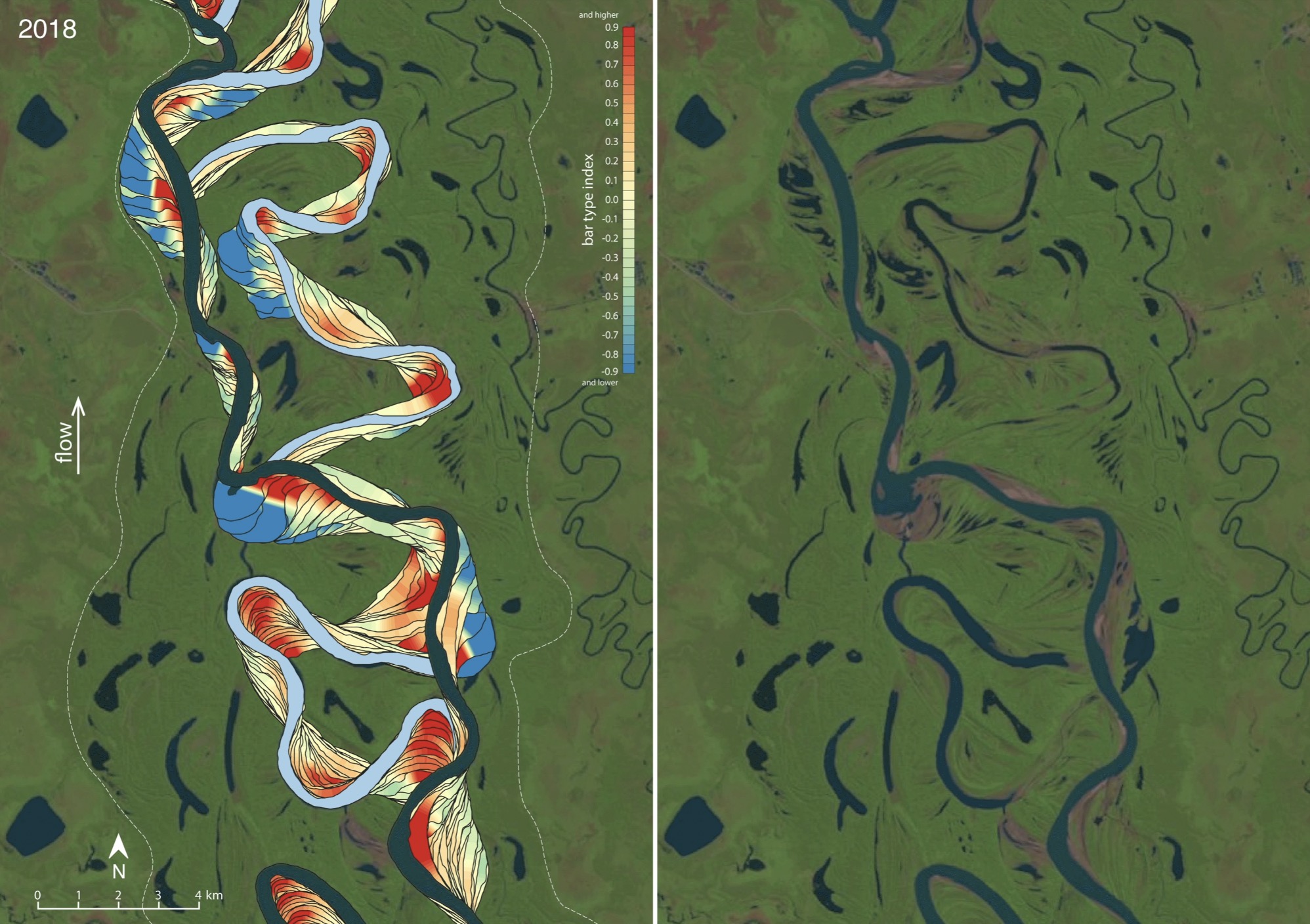
The simplest definition of point bars is that they are sedimentary deposits forming on the inner, convex bank of river bends. [‘Inner’ and ‘convex’ bank means that, looking toward the river, the bank is curving around you.] Amadeus W. Grabau, an early ‘influencer’ in stratigraphy and sedimentary geology, published a beautiful drawing of how meanders grow, point bars evolve, and oxbow lakes form, more than a hundred years ago: Diagram illustrating the development of meanders in a river. From Grabau (1920). ...