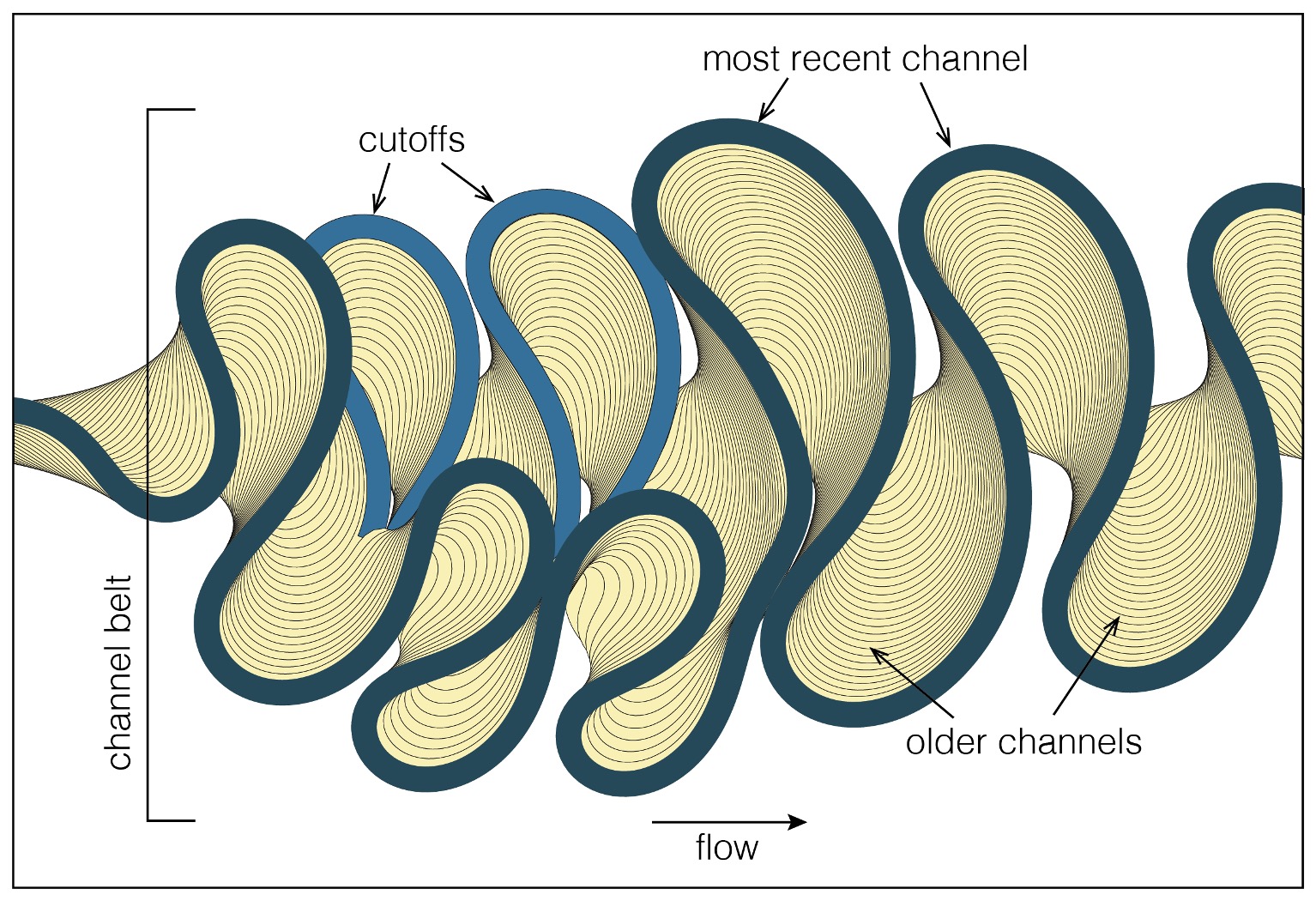
meanderpy: A simple model of meandering
‘meanderpy’ is a Python implementation of a simple kinematic model of meandering, based on the Howard and Knutson (1984) model.
‘meanderpy’ is a Python implementation of a simple kinematic model of meandering, based on the Howard and Knutson (1984) model.
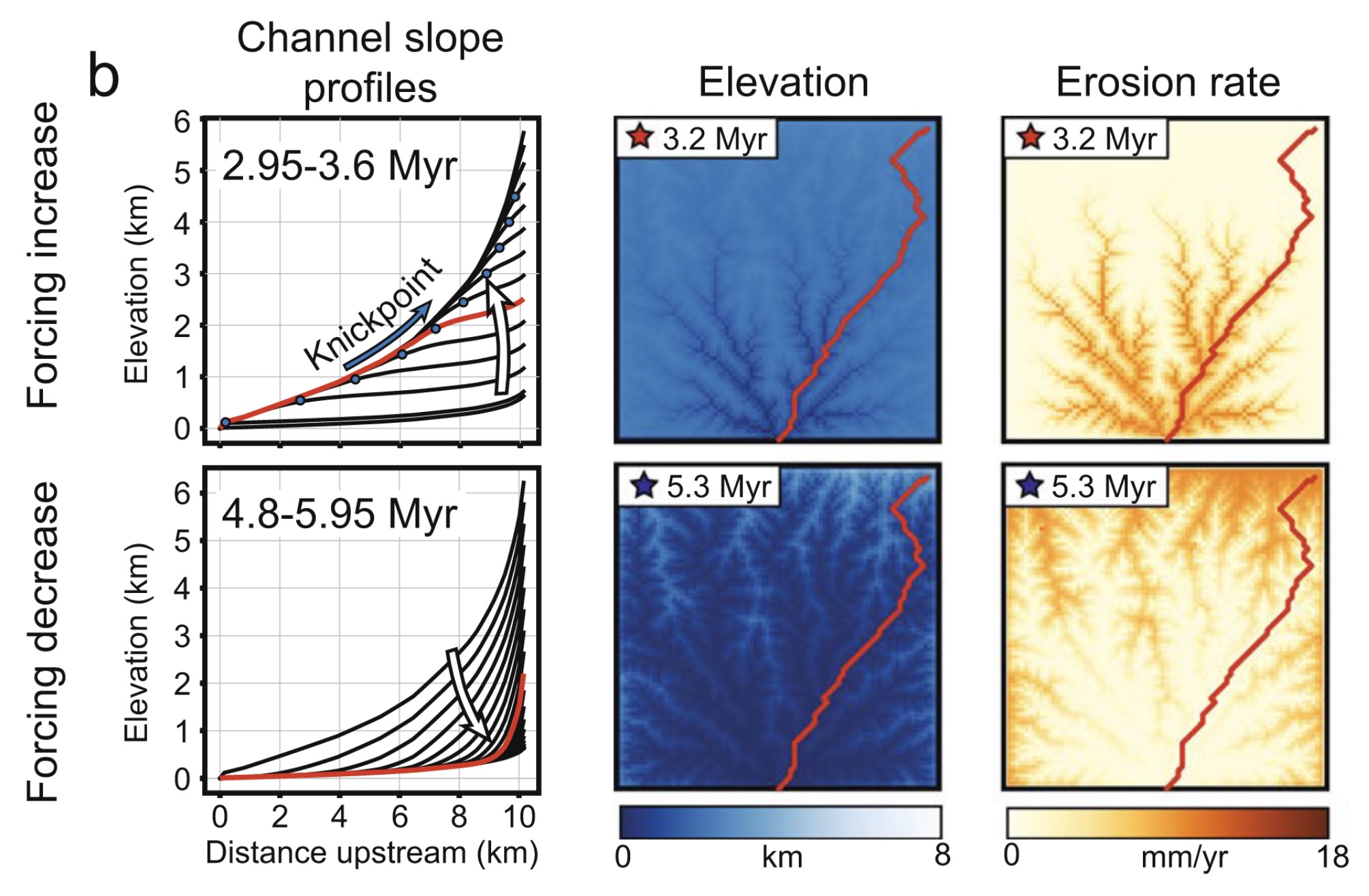
Understanding how environmental forcings (e.g., tectonics, climate) are transformed by erosional landscapes into sedimentary signals is a critical component of inverting the stratigraphic record. Prev…
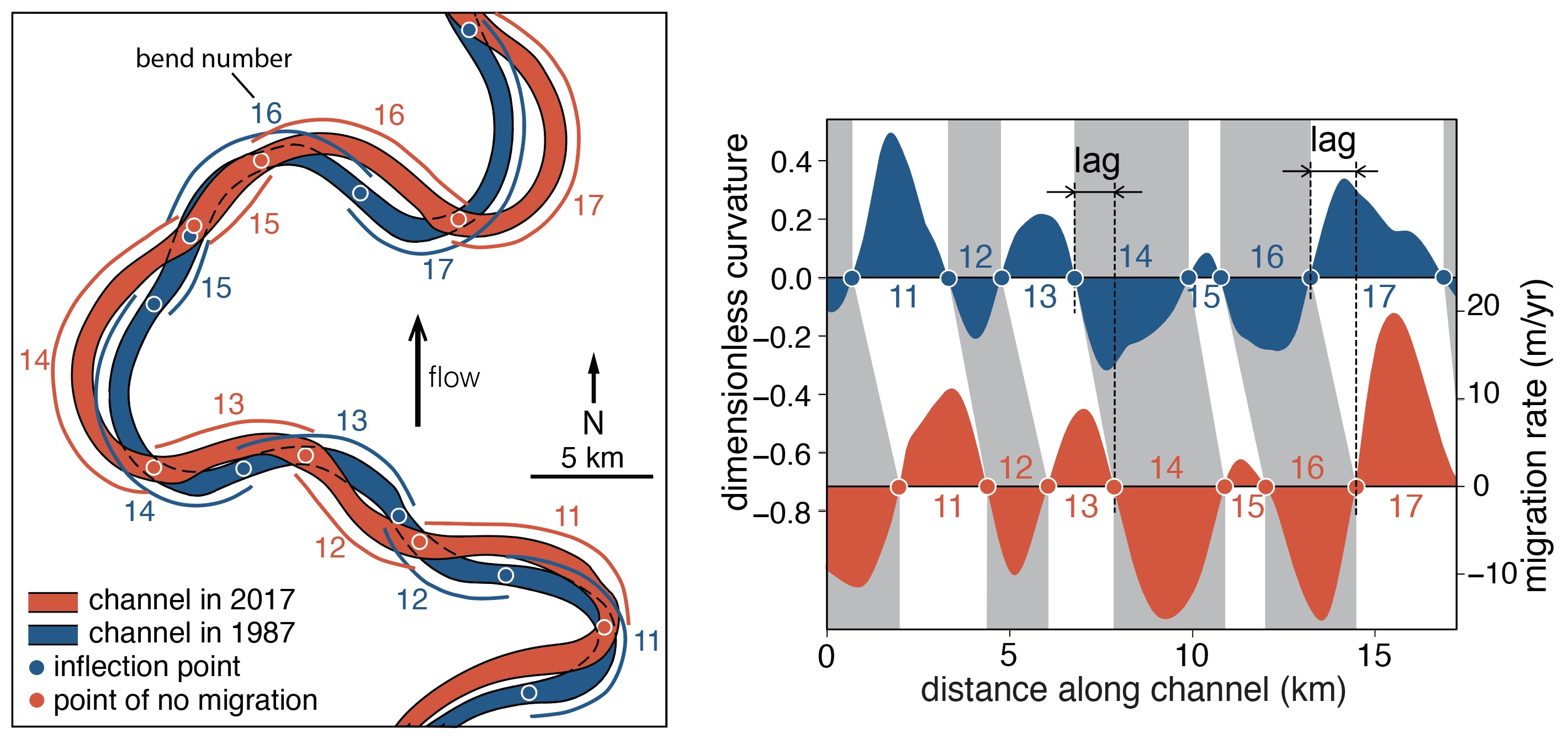
The answer, at least for seven rivers of the Amazon Basin, seems to be negative, as we try to demonstrate in a paper that was recently published in Geology. My coauthors are Paul Durkin, at the University of Manitoba, and Jake Covault, at the Bureau of Economic Geology, The University of Texas at Austin. In this blog post, I try to provide a bit more background to our paper. Why is this an interesting result? After all, it makes sense that there is more outer bank erosion in sharper bends. Erosion is primarily a function of the shear stress exerted on the bank; and shear stress is high where the high-velocity core of the river gets close to the bank (because in this case flow velocity has to quickly decrease from a maximum to zero, and shear stress is a function of the rate of change in velocity). The high-velocity core gets pushed close to the bank if the centrifugal force is large; and the centrifugal force is directly proportional to curvature, 1/R (where R is the radius of curvature). In short, if we use the simplest, most pedestrian physical reasoning, we would expect that erosion, and therefore bank migration, are high in high-curvature bends. However, a lot of previous work on meandering rivers suggests that this is not the case. ...
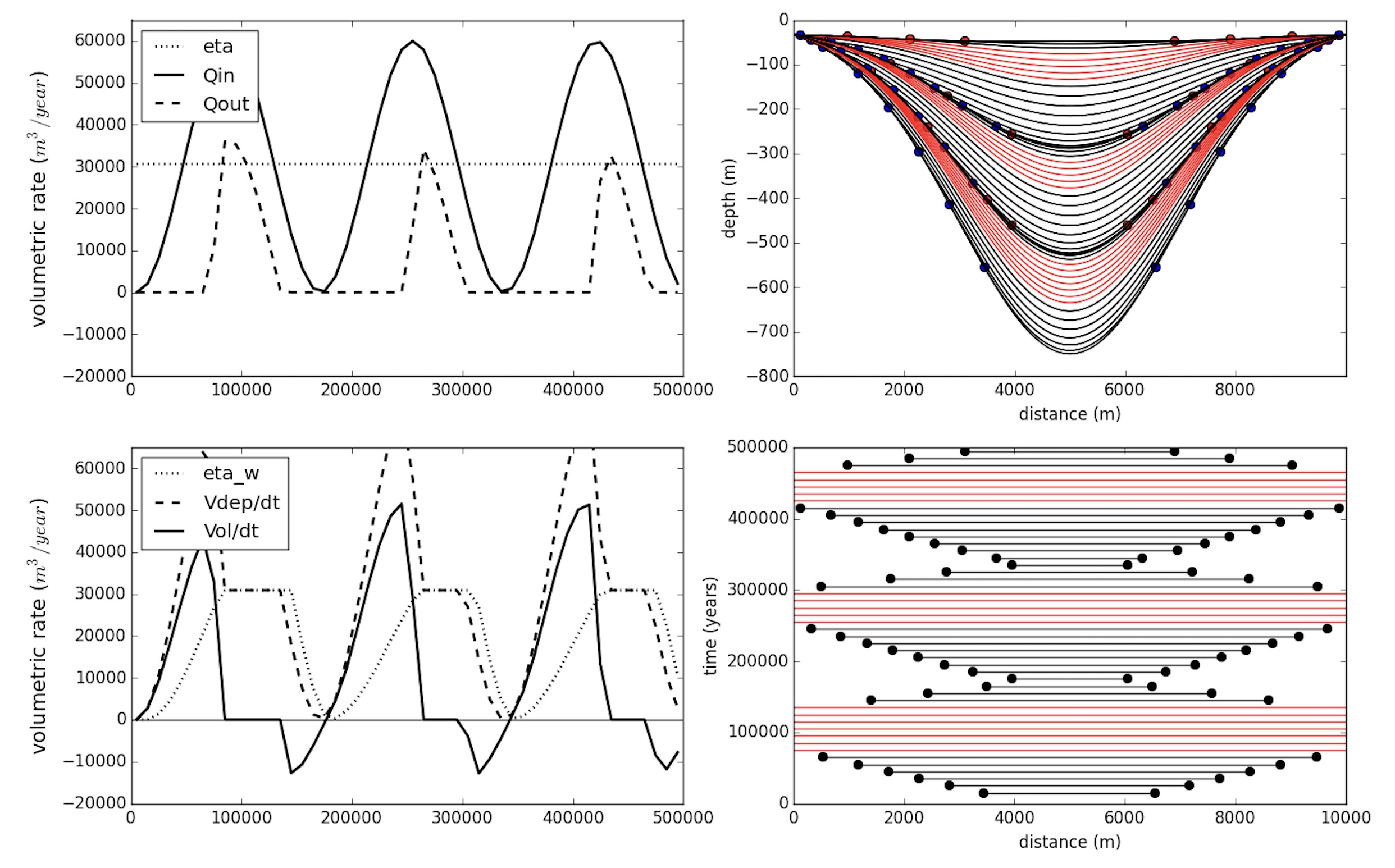
These are animations that accompany our 2015 article on the stratigraphy of salt-withdrawal basins on the slope (Sylvester, Z., Cantelli, A., and Pirmez, C., 2015, Stratigraphic evolution of intraslope minibasins: Insights from surface-based model: AAPG Bulletin, v. 99, no. 6, p. 1099–1129). We have used a simple model that investigates the interplay between subsidence and sedimentation and helps in the understanding of how stratal termination patterns relate to variations in sediment input and basin subsidence. Conventional sequence stratigraphy focuses on what is happening on the shelf and the shelf edge; and the origin of stratal patterns that characterize the typical ‘slug diagram’ are not trivial to relate to the three main parameters that influence continental-margin stratigraphy: changes in sea level, sediment supply, and subsidence. Our minibasin model is simpler because (1) it only has two parameters: sediment supply and subsidence (the impact of sea level - if any - is included in the sediment supply curve); and (2) sedimentary layers are deposited horizontally during each time step. The basic idea is to investigate the geometries of a system that consists of a depression that deepens through time and sediment is deposited in it with a certain rate. ...
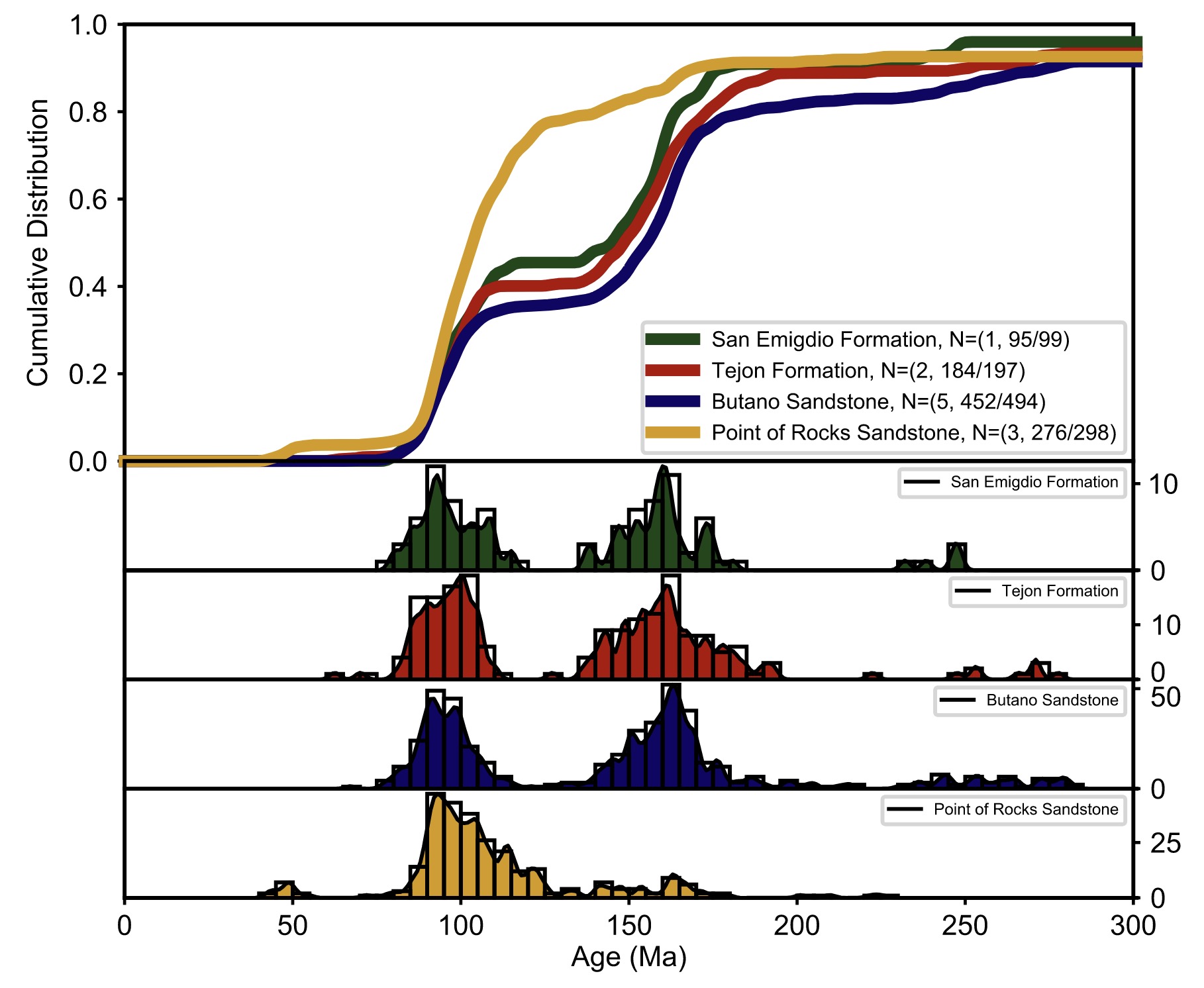
Detrital geochronology and thermochronology have emerged as primary methods of reconstructing the tectonic and surficial evolution of the Earth over geologic time. Technological improvements in the ac…
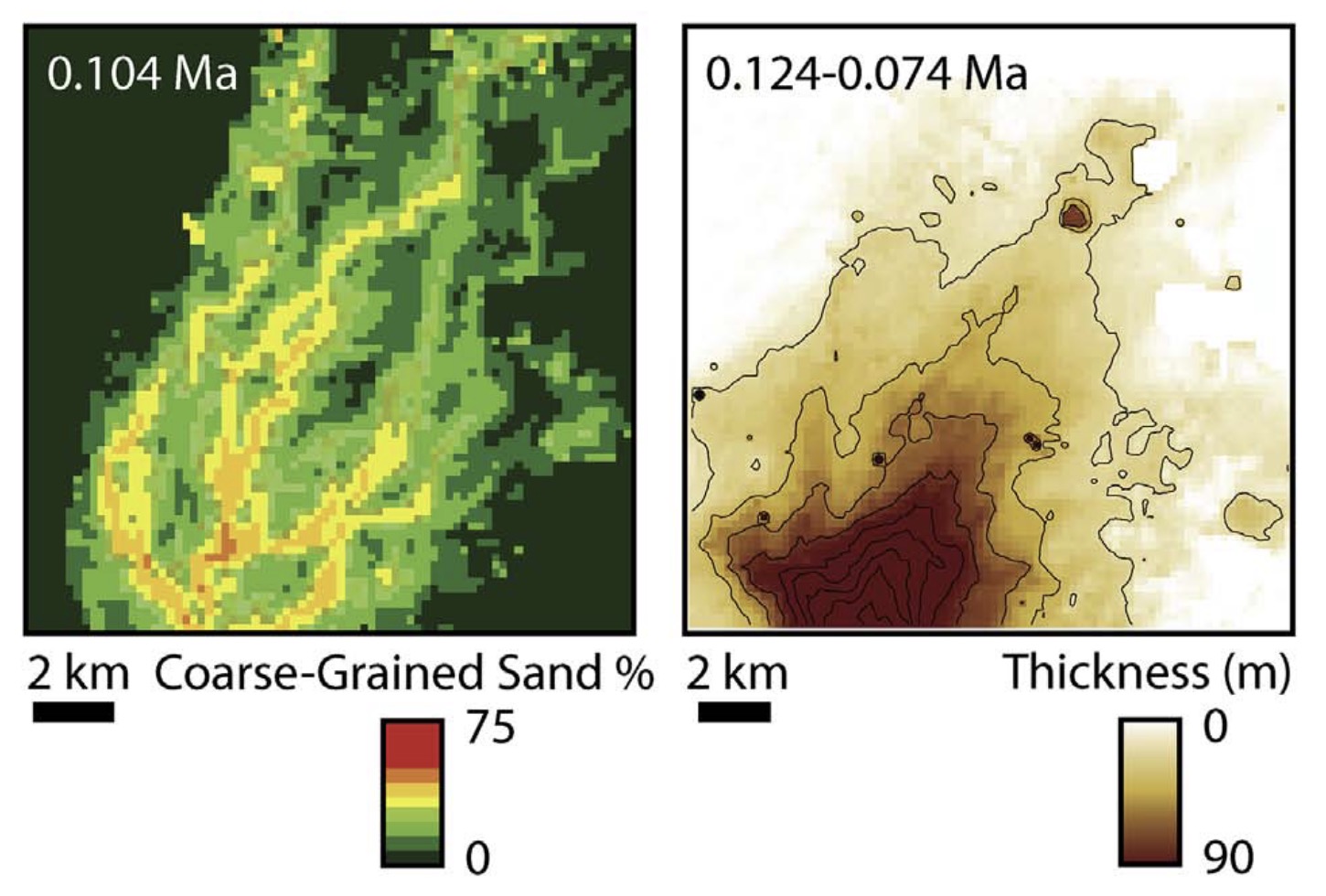
Submarine fans in tectonically active continental-slope basins are targets of petroleum exploration and pro- duction. These slope fans commonly comprise compensationally stacked sandy and muddy archit…